
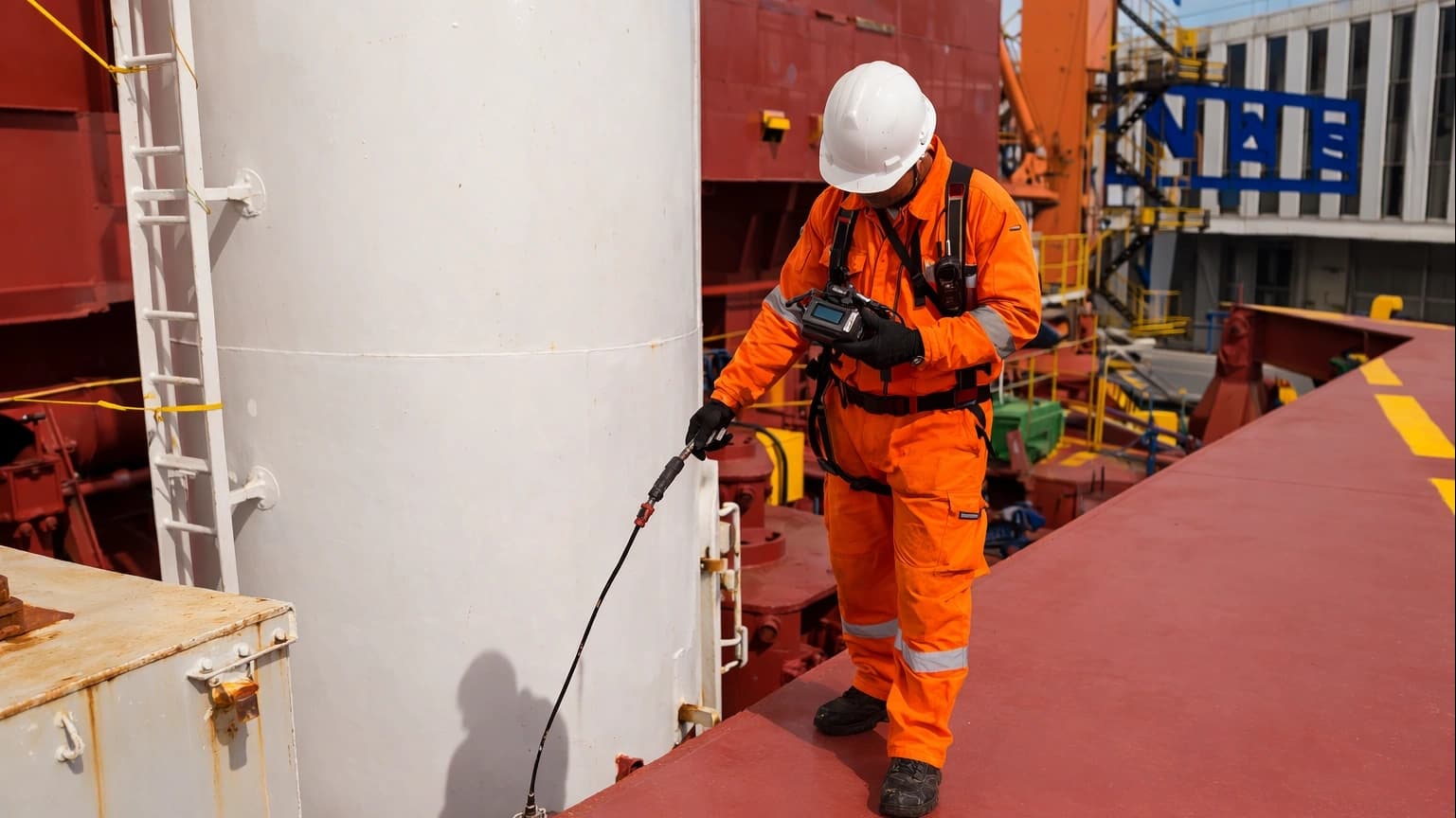
Ultrasonic and salinity test are two fundamental procedures in the maintenance and inspection of vessels, playing a crucial role in ensuring the safety and integrity of cargo, especially during international voyages. Ultrasound testing checks whether the hatch covers of the cargo holds are properly sealed, ensuring that no water, dust, or contaminants can enter. International standards, such as the IMSBC Code, and charterparty requirements mandate that the holds be hermetically sealed and free from leaks. This test helps prevent legal liability for cargo damage and potential disputes with charterers or buyers. Salinity testing ensures that the cargo holds and the cargo are free from salt residues, protecting the quality of the cargo and preventing corrosion of the ship’s structure. Many bulk products, such as grains, soybeans, fertilizers, food products, and even steel products, can be damaged by contact with salts. In addition, it ensures safe operations and compliance with international regulations, preventing legal and financial issues. The combination of ultrasound and salinity testing ensures that the cargo holds are dry, clean, and free of contaminants before loading, protecting the cargo, preventing structural damage to the vessel, and ensuring peace of mind and efficiency throughout the operation. Without these tests, there are significant risks of cargo damage, rejection, accidents, and legal disputes.
Nossos serviços são realizados com a máxima precisão técnica, seguindo padrões internacionais para garantir que todas as etapas da operação ocorram com segurança e conformidade documental. Cada inspeção gera um relatório detalhado com o respaldo técnico de nossos profissionais.